





Eye For Film >> Movies >> The Last Footage (2026) Film Review


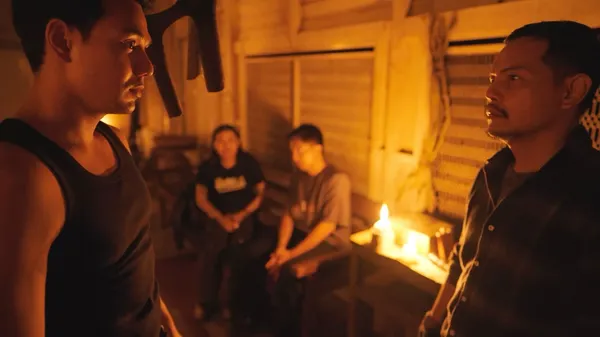

The first thing that will impress you about The Last Footage, Myanmar’s first ever found footage horror film, is just how good it looks. It was recorded entirely with 4k action glasses but aside from the first person perspective – which occasionally changes when, for example, the glasses are left on a table to charge – you really wouldn’t know it. There may not be the extra layer of data which the Paz brothers put to good use when they made Jeruzalem using Google Glass in 2015, but the advancements in terms of quality are stunning. Whatever your feelings about the ethics of people wearing such things in public, this is a great use for them.
The second thing that stands out is that the glasses are accepted by their new owner’s friends in pretty much the same way as they might be elsewhere in the world. They’re an expensive but not especially unlikely toy for Aung Khant (writer/director Arkar Soe Oo), one of a group of comfortable, educated middle-class friends who enjoy dinner parties and making YouTube videos together. Myanmar has changed a lot in recent decades. They wear the latest fashions or heavy metal t-shirts, they seem to have much the same dating culture as the wider world, and one of them has a little brother with a plastic dinosaur named Brad Pitt. But these are city people. They laugh at Mya (Lain Maw Tee) when she asks if they will be safe from ‘ghosts and supernatural stuff’ on the remote rubber plantation where they plan to have their next adventure, but they are about to enter a very different world.
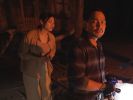
Rich boy Thu Ya (Charlie Nyein) thinks it’s his world. He is, after all, the owner, having recently inherited it from his grandfather – that’s how he knows that there’s a house out there where they can spend the night. But possession, as they say, is nine tenths of the law, and capitalist notions of ownership have yet to be fully accepted by the people who still make forests their home. The idea that mere humans could claim ownership of land inhabited by much more ancient and powerful forces is laughable to them. As the group travels out to the plantation, transported by Rasta bus driver Ko Htet (Swan Htet Aung), they meet Thu Ya’s uncle, Ko Nyo (seasoned actor Kyaw Kyaw Bo), who insists that there’s something wrong with the forest there and tries to warn them off; then, when they will not be dissuaded, insists on going with them.
It is at this point that our tour of modern Myanmar ends. The 300 acre Wingabar Forest may once have been cultivated – there’s a particular eeriness about the neat spacing of the trees in an otherwise wild environment – but it has never been tamed. The first indication they receive that something is different here is a series of small shrines that don’t look familiar, and which Ko Nyo insists should not be used for making offerings. A little further along the trail, a tremendous roaring noise suggests that something is more seriously amiss, and the child is separated from the group, leaving his sister Linn (Li Li Kyaw Khaing) frantically searching for him. The film abandons subtlety at this point. Upon reaching the house, the group meets a stooped elderly woman (Mo Khum), dressed in rags and leaning on a twisted staff, who tells them “It has awakened. You all need to leave.”
What follows involves ritual magic, the undead, a big monster with antlers and spikes, and an awful lot of screaming and running about. Aung Khant’s actions are carefully scripted so that we can stay abreast of all the important action, whilst remaining true to the character. The screaming gets a bit much and the various characters make some terrible decisions, most notably sticking around to watch the monster in action when they really ought to be moving further away from it quite fast. Rapid-fire dialogue can be hard to keep up with, but there’s not a lot of meaning to miss.
There are slightly too many characters here, meaning that few get sufficient room to develop into people we can care about or find interesting to watch. With this in mind, the film will work most effectively on viewers who find it easy to imagine themselves in that situation. The film utilises fear of the dark and fear of the unknown, but ultimately hinges on that doubt still lingering in the minds of many modern people when they move out of reach of reassuring infrastructure and services, or when things happen that make it harder to have faith in reason. It’s overlong and quite repetetive, which some will find wearing, but it’s assembled with impressive confidence for a first time director. If parts of it seem overly familiar, be patient – there is nothing forgettable about the ending.
The Last Footage screened as part of the 2026 Fantasia International Film Festival.
Reviewed on: 03 Aug 2026


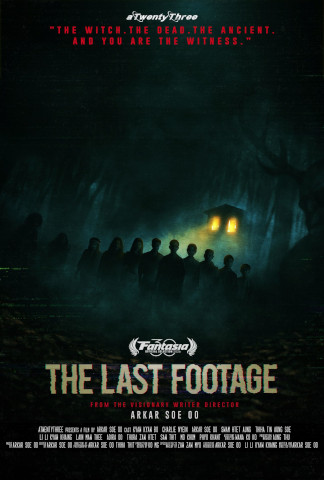
Director: Arkar Soe Oo
Writer: Arkar Soe Oo
Starring: Kyaw Kyaw Bo, Charlie Nyein, Li Li Kyaw Khaing, Swan Htet Aung, Arkar Soe Oo, Mo Khum, Phyo Kant, Lain Maw Tee
Year: 2026
Runtime: 88 minutes
Country: Myanmar
Search database:
